
When a company invests in training, one question always follows: what changed because of it? HR and L&D teams in Bangalore and across India are being asked to answer that more often, and attendance sheets and feedback forms rarely satisfy a finance head.
At Change Institutes, we have delivered practical, experiential training in soft skills, leadership and communication since 2013, and our corporate programmes are mapped to each organisation’s business goals. That is what makes results easier to prove: the goal is clear before the first session begins.
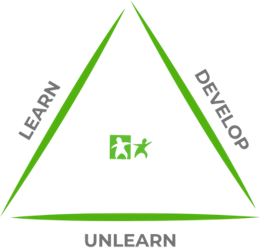
This guide explains how we think about measuring training results, and how your team can use the same approach whether you work with us or not. It follows the four stages of our method: Unlearn, Learn, Develop, Change.
Why every programme starts with your business goal
You cannot show change without a starting point. Our corporate training is designed to build confident professionals, effective managers and high-impact leaders, and each programme is mapped to your business goals and delivered at your site or ours.
In practice, that means the first conversation is about the problem, not the course. “Improve communication” is too broad to measure. “Reduce escalations from the support team” or “help new managers handle difficult conversations” gives both sides something concrete to work towards.
Our consulting work follows the same logic. For St Mary’s School in Andhra Pradesh, we began with a needs analysis and departmental assessments, so the framework for language proficiency, communication and life skills was built on what the school actually needed. You can read the full story here.
For HR teams, the takeaway is simple. Before you brief any training provider, write down the business problem in one sentence, pick two or three numbers it should move, and record where those numbers stand today.
Unlearn, Learn, Develop, Change: what to look for at each stage
Every Change Institutes programme runs the same four-stage arc, whether it is a communication batch or a leadership series for senior managers. Each stage leaves a different kind of evidence, and knowing what to look for makes measurement far easier.
Unlearn. This is where old habits, beliefs and patterns are challenged to make room for progress. The early sign is a change in attitude: participants question how they used to run meetings, give feedback or handle conflict, and managers notice the openness.
Learn. Sessions are built around real workplace situations, role plays, simulations and group practice. The evidence here is visible skill: you can watch a participant handle a scenario better at the end than at the start.
Develop. Learning turns into lasting growth, with a focus on leadership qualities, emotional intelligence and applied expertise that holds up under pressure. Look for steadier behaviour on the job, such as calmer escalations, clearer instructions and better delegation.
Change. Real change begins when learning turns into action. This is where business numbers start to move, and where post-training support helps people keep going after the programme ends.
The reason we start with unlearning is that most programmes add new skills on top of old habits. Clearing those habits first is what makes the change stick, and it is also what makes the later improvement visible.
What results look like in each programme
Different programmes should move different numbers. Here is what HR teams can track for the main programmes we run.
Leadership Development. Our foundational, intermediate and advanced tracks cover first-time managers to senior leaders. Track team engagement, 360-degree feedback on the manager, how often routine decisions get escalated, and attrition within the manager’s team. These move slowly, so review them at six and twelve months as well as at 90 days. Our post on the traits of a high-impact leadership programme explains what to look for when choosing one.
Soft Skills and Communication. This programme builds communication, teamwork, confidence, presentation and professional behaviour. Customer satisfaction scores, escalation counts, internal feedback from partner departments and the quality of client presentations all show whether the skills are being used.
Train the Trainer. Here the aim is for your own people to run powerful sessions using modern facilitation techniques. Count the sessions your internal trainers deliver, collect participant ratings, and note how much less you depend on outside vendors. Our article on building in-house experts goes deeper.
Executive Series. Our premium series for founders, coaches, consultants and business leaders with six or more years in their field covers Public Speaking Mastery and TED-style Talk Design. Here the evidence is practical: stronger talks, clearer messaging and better stakeholder response.
In every case, combine hard numbers from your business systems with a short manager observation checklist completed before and after training. And note anything else that changed in the same period, such as a new tool or a restructure, so the improvement you report is one you can defend.
Case example: the Biovet QC and QA workshop
A good illustration of this approach is our leadership and capability workshop for the QC and QA teams at Biovet, a manufacturing client. It was built around four themes: culture, communication, accountability and decision-making. The idea behind it was that quality is not merely inspected, it is led.
Those four themes translate neatly into things an HR or operations team can watch. Culture shows up as people raising quality concerns early rather than late. Communication shows up as cleaner handovers between QC and QA. Accountability shows up as every corrective action having a clear owner and a closing date. Decision-making shows up as faster, better-documented calls when a result is out of specification.
Each of those behaviours connects to a number the business already tracks, such as repeat deviations, query turnaround time, on-time closure of corrective actions and investigation cycle time. Read the full Biovet case study for the programme itself.
The same method works in any function. Start from the themes, name the behaviour you expect to see, then choose the number that behaviour should move.
Reviewing results at 30, 60 and 90 days
Behaviour changes before business numbers do, so we suggest HR teams review in three passes after any programme.
At around 30 days, check learning and early use. Repeat the role play or assessment used during training, ask each participant to share one thing they have already applied, and confirm that managers have had a follow-up conversation with their team members.
At around 60 days, check behaviour. A short manager checklist or a 360-degree pulse, compared with the one completed before training, shows whether people are working differently. This is also the point where a manager’s support makes or breaks the result.
At around 90 days, check the numbers. Pull the figures you recorded before the programme and compare them with today’s, noting any other changes in the same period. Add two or three short stories from participants and managers, because they give the numbers a human face.
For leadership programmes, add reviews at six and twelve months. Engagement and retention take longer to shift, and judging them too early undersells the programme.
Where and how we deliver
Our centre is in Kalyan Nagar, Bangalore, and corporate programmes can run at your site, at ours or online, in classroom, online or hybrid formats. We also serve Mumbai, Noida, Hyderabad, Gurgaon and Jaipur, so teams spread across cities can follow the same programme with the same method.
Our clients include teams at Samsung, Oracle, Wipro, Titan and Toyota, and our work has reached half a million learners across 10 countries.
Frequently asked questions
What corporate training programmes does Change Institutes offer in Bangalore?
Corporate programmes cover leadership development, communication, soft skills, executive presence and team effectiveness. Each one is tailored to the organisation’s goals and can be delivered at your site, at our centre or online.
How is Change Institutes different from other training institutes?
We start with unlearning. Most programmes add new skills on top of old habits, while ours begin by clearing the patterns that hold people back, then build practical skills through hands-on sessions with expert guidance and support after the programme ends.
Who can join Change Institutes programmes?
Our programmes are open to students, job seekers and working professionals, as well as organisations booking for their teams. Leadership Development runs foundational, intermediate and advanced tracks, from first-time managers to senior leaders.
Can programmes be delivered outside Bangalore?
Yes. We deliver across Bangalore, Mumbai, Noida, Hyderabad, Gurgaon and Jaipur, and online anywhere in India.
How do we get started?
Share a short enquiry or book a free consultation. A trainer will speak to you to understand where your team is and where you want it to be, and will tell you honestly which programme fits, or if none does.
Plan training you can measure
If you are planning a leadership, communication or soft skills programme and want the success measures agreed before it begins, talk to us. Tell us the business goal and a trainer will help you choose the right programme and what to track.
Get a corporate training proposal, book a free consultation, or message a trainer on WhatsApp. You can also write to info@changeinstitutes.com.
Related reading: A practical checklist for HR teams picking a corporate training company in Bangalore and Why leadership training is essential for building high-performing teams.