
You were promoted because you were great at your job. Now the job has changed. Yesterday you were measured on your own work. Today you are measured on the work of your whole team, including people who were your peers last week.
Most first-time managers are never trained for this shift. They get a team, a tracker and a weekly review, and are expected to figure out the rest. The difference between those who thrive and those who struggle is rarely technical. It comes down to a handful of soft skills.
Here are the seven that matter most in your first year, each with a simple drill you can start this week.
Start by Unlearning
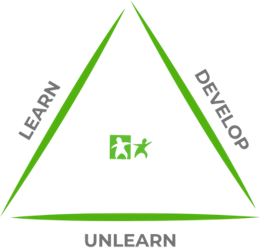
At Change Institutes, every programme begins with the Unlearn stage, and new managers have plenty to let go of. “It’s faster if I do it myself” is true for one week. Repeat it every week and you become the bottleneck. Having every answer was your strength as a specialist. As a manager, it trains your team to wait for you. Letting go of these habits makes room for the skills below.
1. Active Listening
Your team will tell you what is going wrong long before a metric does, but only if you listen without rushing to fix it. Let people finish, ask one follow-up question and repeat back what you heard.
Drill: In your next three conversations, ask “What else?” before you share an opinion. The real issue often comes out second.
2. Delegation
Delegating is not handing off tasks you dislike. It is giving someone ownership of an outcome, with enough context to make decisions without you. Most new managers hand over the task but keep the decisions, so the work keeps coming back to them.
Drill: For one task this week, explain the goal, the deadline and what “done” looks like. Then ask how they plan to do it, and resist telling them how.
3. Giving Feedback
“Good job” and “needs improvement” change nothing. Useful feedback names a specific behaviour, its impact and what to do next. Give it within 48 hours: corrections in private, praise in public.
Drill: Use the SBI model once this week. Situation: “In Tuesday’s client call.” Behaviour: “You summarised the next steps.” Impact: “The client confirmed the timeline on the spot.”
4. Difficult Conversations
Missed deadlines, attitude issues, a former peer who now reports to you. Postponing these conversations feels easier, but the cost grows every week you wait.
Drill: Name the one conversation you have been avoiding and open it with a fact, not a judgement: “The report was due Friday and arrived Tuesday. Help me understand what happened.”
5. Emotional Intelligence
As a manager, your mood sets the team’s mood. Emotional intelligence means noticing your own reactions before they spill into a meeting, and reading what people are not saying out loud.
Drill: Before each team meeting, take 30 seconds to name how you are feeling. If it is frustration, decide in advance not to let it set the tone.
6. Coaching Instead of Telling
When someone brings you a problem, the quickest reply is the answer. The better reply is usually a question. Coaching builds people who can solve the next problem without you.
Drill: When asked for help, respond first with “What have you tried?” and “What would you do if I weren’t here?”
7. Executive Presence
New managers suddenly present upwards, to directors, clients and leadership reviews. Executive presence is mostly preparation: lead with the answer, keep updates short and stay calm when challenged.
Drill: Rewrite your next status update so the first line is the conclusion (on track, at risk or blocked) and why.
Your First 90 Days
You cannot build seven skills at once. Focus on one area each month:
- Days 1–30, Listen: Hold a one-on-one with every team member and learn each person’s goals and frustrations.
- Days 31–60, Hand over: Delegate real ownership, coach instead of solving, and give everyone specific feedback at least once.
- Days 61–90, Lead: Have the conversation you have been avoiding, and make every update to leadership answer-first.
Mistakes to Avoid
Trying to stay “one of the team”, changing everything in month one, cancelling one-on-ones when busy and hiding problems from your own manager. Each feels safe in the moment and costs trust later.
Build These Skills with Change Institutes
Since 2013, Change Institutes has trained professionals from first-time supervisors to senior leaders, for teams at Samsung, Oracle, Wipro, Titan and Toyota. Our leadership development programme takes new managers through the four-stage Unlearn, Learn, Develop, Change method, using role plays and real workplace scenarios instead of lectures. Sessions run in Bangalore, online, hybrid or on-site for teams across India.
Book a free consultation and a trainer will tell you honestly which programme fits you.